
Procrastinating or Avoiding…What’s the Difference?
I am typically not one to procrastinate. 
If I need to do something, I schedule it into my daily or weekly to-do list and take care of it. Done.
So it’s been very curious to me that I’ve been finding all kinds of things to do instead of working on new Mac training videos.
My desk is cleared. My monthly receipts are filed. I have the entire morning blocked out for doing the first video and, instead, I am writing this blog post.
I looked up the definition of Procrastination:
Procrastination refers to the counterproductive deferment of actions or tasks to a later time. Psychologists often cite such behavior as a mechanism for coping with the anxiety associated with starting or completing any task or decision.
There are three criteria for a behavior to be classified as procrastination: it must be counterproductive, needless, and delaying.
When I think of my behavior in terms of these criteria, I’m NOT procrastinating. I am avoiding.
And I know it’s because doing these videos is a HUGE project. It involves changes to my website and my mailing list program. It means learning how to record and save and upload the videos. It means standing in front of the camera and being authentic and friendly and knowledgeable.
And I’ve never done these things before.
But I know my material. I know that the series will be very successful. And yet, I’m having trouble beginning.
Doing all of those other productive things has helped me step back from the project. And from this perspective I can see how the hugeness of it is simply overwhelming me.
No wonder I’ve been avoiding it.
So I took out a piece of paper and started to dissect the project into smaller, more do-able steps. And, following one of SARK’s fabulous suggestions, I used language that will make the tasks more inviting.
So, instead of: Learn the video recording software, I’m going to PLAY with the video software.
Instead of: Change the website and get a new mailing list program, I’m going to EXPLORE new ways to connect with my clients.
And, instead of expecting to get it all done in this one morning, I’m just going to begin.
So what are you putting off because it seems too daunting?
How can you break the BIG THING into smaller, more manageable tasks?
How can you turn your To-Do’s into fun and exciting activities that you might actually WANT to accomplish?
How can you begin?
[ssba]Our Last Week Lakeside
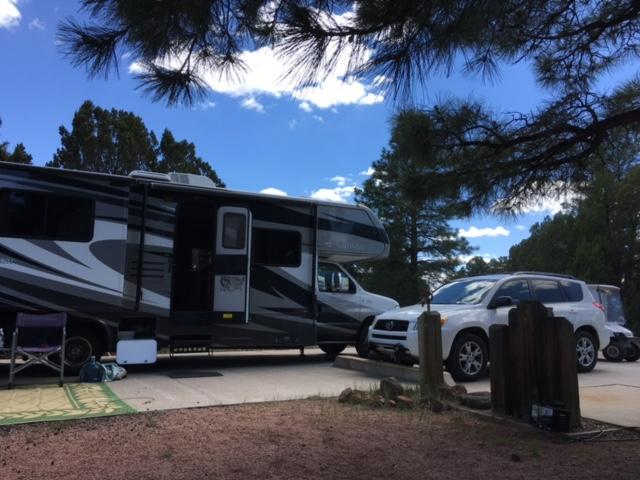
We’re coming up on our last week of camp hosting here at Fool Hollow Lake. We’ve decided to stay in the mountains for the summer at an RV Park in Pinetop, 20 miles southeast of here, and about 1000 feet higher in elevation. This way, we’re still in the cooler pines, out of the summering campground crowds, and close enough to Phoenix if my dad needs us.
Since we won’t be hosting, we’ll have a lot of free time, which can be good if we get out and explore and connect with people. Or it will make us crazy. I’m hoping we’ll do some day trips around the area, maybe even scout out some campsites for some dry forest camping.
Marika is thinking about doing some hospice volunteering and I’m excited that I’ll be free to take a morning yoga class. I’ve also been looking at possible art classes, and volunteer opportunities. And I’ve been nudging myself to set up some Heart Sparks workshops. But I wasn’t sure if I still had the passion, or if it was just something familiar and easy that I thought I SHOULD do.
Yesterday, I walked down the long flights of steps to the lake shore for a solo outing, to unwind after a full and fun and heartwarming visit with friends from Phoenix. I found a spot on a wide rock and watched the water lapping against the thin grasses, and I asked the Universe for a sign to know if I do still want to share Heart Sparks workshops.
I watched the breeze drawing lines farther out on water where a pair of kayaks floated by, and I wished that I had the energy to inflate my kayak and get it down to the boat ramp and into the water. But since I wasn’t willing to do all that, I reminded myself to just enjoy watching the people who were out there. I overheard spots of conversations from the people in a fishing boat, hoping for a rainbow trout, and waved to a couple as they paddled by.
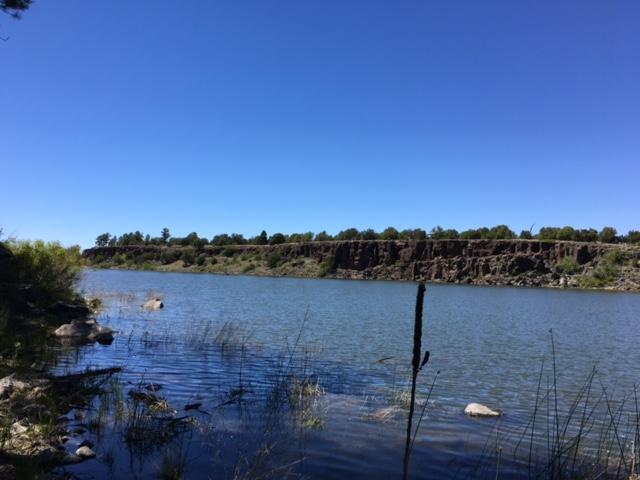
When the sun got too warm, I walked back up the slope and along the pseudo-path under the shade of the pine trees until the rocks got too big to step over easily. I watched the water from this higher vantage point as a mallard skimmed across the water going to the right and the resident great blue heron flew higher up, to the left. I could hear the flapping of its enormous silvery wings.
A family with two dogs had set up chairs and coolers near the water and another group was coming down the stairs, so I started to head back to the stairs. A woman about my age walked past and we said hello, and what a beautiful place this was. She continued on the path and I headed back up the stairs.
About three-quarters of the way up, I sat on the steps to catch my breath and enjoy the view. The woman I had seen walking stopped to talk. She said she was visiting the lake for the day, and staying at a B&B up in Snowflake. A bit later she shared that her son was getting married that day, but she wasn’t invited to the wedding. Instead of staying home and feeling sorry for herself, she had taken herself to the mountains for the weekend.
I applauded her for such beautiful self-care, and she thanked me.
We talked about camp hosting and she said that she’ll be coming up on retirement next year and has no idea what she wants to do, but she recited a long list of what she didn’t want to do.
I shared my belief that the Universe needs to hear what you DO want. And that, if you don’t know, then focus on how you want to FEEL. And she had never considered that before.
I told her that I was a life coach, and that I had written a book, and she googled it right there, and I told her that we were staying in the area for the summer, and how I had been doubting if I wanted to do Heart Sparks workshops again. She said, “You’d be good at it.” And I said, “I AM good at it!” And I smiled, hearing myself say it out loud. “And it’s pretty obvious from this,” I moved my left hand back and forth in the space between us, “that I do still love it!”
And I thanked her. And I invited her to write about her ideal day with no restrictions. To include smells and touch and people. “Or no people,” she said. And I smiled big and said, “Exactly!” And she said she was excited and nervous to go back to her B&B and try it.
She asked if she could take my picture and I said, “Only if you’re in it too.” She said, “I don’t do selfies.” “Then no picture,” I said.
I stood up and she came over and stood next to me with the lake behind us and took our picture. I asked her to email it to me, and then she would have my email if she wanted to stay in touch.
We both thanked each other again, and, of course, we hugged before we parted.
Today she sent me a copy of the photo and said that she was struggling with the assignment, but that the struggle was a good thing. And I was thrilled. And again, reassured that there are people out there ready to connect with me. I just needed to say yes.
And so, I’m making a list of places to propose my Heart Sparks workshops and I am beginning to envision myself engaging with women in deeper questions and conversations, and re-sparking my own heart.
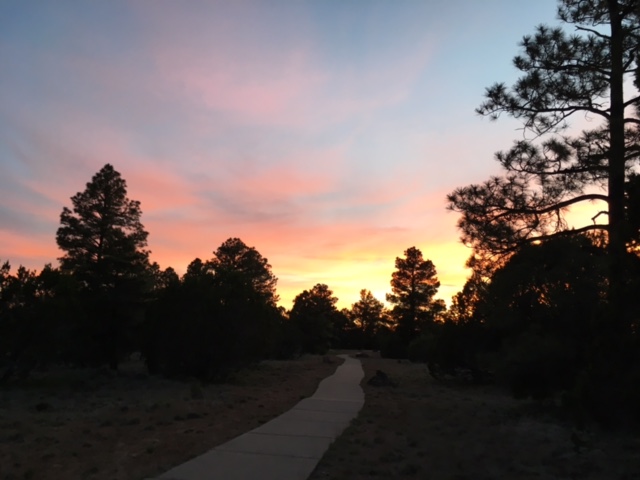
Full Year, Full Circle
On May 18, last year, Marika and I pulled out of the driveway of her just-sold house driving our new-to-us 32 foot motor home and towing her RAV4. Our first stop was Show Low, AZ, 180 miles north and east of Phoenix, in the White Mountains.
Almost a year later, we are here again, having driven, literally, full circle.
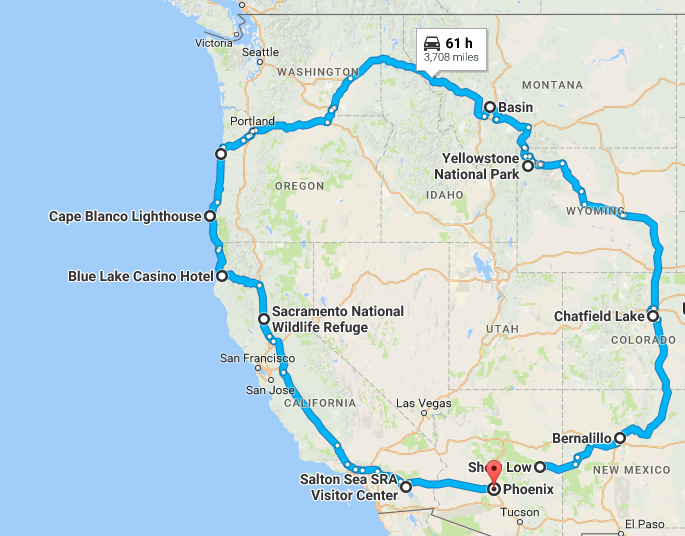
I haven’t yet tallied our total miles, or printed our spending reports for the year. But we’ve been reminiscing about our favorite campsites, the best and worst meals, the small towns we’d like to revisit, and the interesting people we’ve met along the way. And how so much has happened and changed, and still, there is so much that is the same.
If you’d like to reminisce with us, and catch up on the stories from this past year of living full-time on the road, here are the links:
https://www.sparktheheart.com/2016/our-new-home
https://www.sparktheheart.com/2016/its-not-what-happens-its-how-you-handle-it/
https://www.sparktheheart.com/2016/georgia-okeeffes-new-mexico/
https://www.sparktheheart.com/2016/the-balance-between-now-and-next/
https://www.sparktheheart.com/2016/how-to-appreciate-a-dirty-spoon/
https://www.sparktheheart.com/2016/the-geyser-effect-what-really-happened-at-yellowstone
https://www.sparktheheart.com/2016/the-healing-mine
https://www.sparktheheart.com/2016/the-power-of-immersion
https://www.sparktheheart.com/2016/between-here-and-there
https://www.sparktheheart.com/2016/7497/
[ssba]
Life on the Mountain
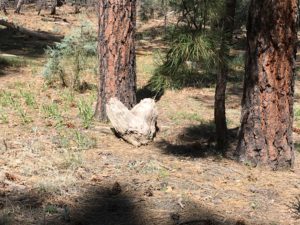
We are finally settling into our new home base for the next two months. We’re volunteering as camp hosts at Fool Hollow Lake State Park in Show Low, Arizona, a cool, summer getaway in the White Mountains. We’re at 6300 feet elevation, 180 miles north of Phoenix and 60 miles west of the Arizona/New Mexico state line. According to the signage along a nearby hiking trail, this area has the largest contiguous stand of Ponderosa Pines in the world.
Our campsite is actually in one of the camping loops, a first for us. In all of our previous hosting jobs, our site has been in a separate area, or with the other hosts. Here, there are campsites on both sides of us, and, even though they are at least 100 yards away, and on the other side of pine trees and junipers, we can hear people’s conversations and smell their evening fires.
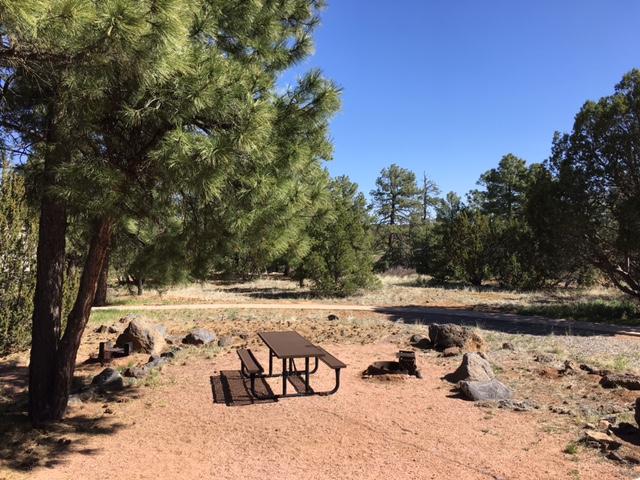
We’re in the Cinnamon Teal loop, on a bluff about a hundred feet above the east side of Fool Hollow Lake. We are surrounded by pines and junipers, with a peek of the rock wall on the opposite side of the lake, but we’re too high up and set back to see the water. Our site is about a hundred yards away from the very tasteful bathroom building, and across the road from the only dumpster in the loop, so there is a lot of passing traffic.
But it’s a lovely site. It’s a double space, intended for two sets of campers, so we have two fire pits, a really large area of dirt and gravel that’s ringed with the natural grasses, rocks and random poppings of wildflowers, and enough trees to provide afternoon shade on the cement patio area. The dogs can use the full length of their twelve-foot cables to sniff, and explore, and lie down, without reaching any passing dogs. And there is plenty of room for our motorhome and car, a visitor’s vehicle, and our golf cart. And even on a full-house weekend, it’s still pretty quiet.
In exchange for our full hookup site, we are the Rover Hosts, filling in where the other hosts need extra help, and on their days off. Because we are not the official hosts for any particular loop, we don’t have an official Camp Host sign at our spot, and I am glad, because campers don’t knock on our door with questions.
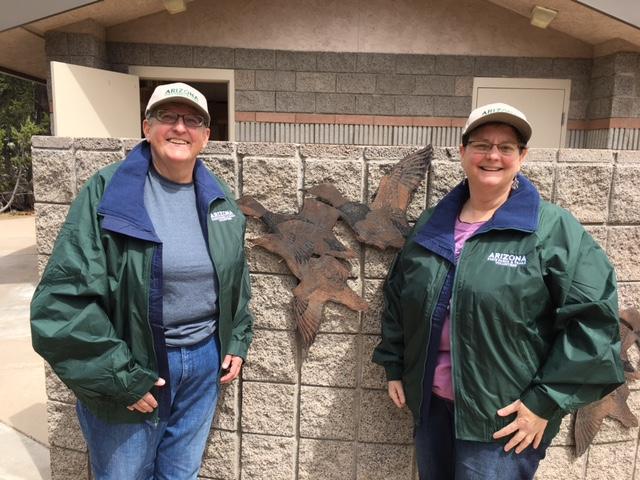
We work four hours a day, five days a week, with Fridays and Saturdays off, cleaning bathrooms and campsites, and driving around in our cart to be a presence in the campground. The work is simple, but physical: spraying and wiping all of the bathroom surfaces, sweeping and mopping the floors, shoveling ash and coals from the fire pits, carrying buckets of burned firewood, raking the gravel around the sites, picking up litter, and leaf-blowing the tiniest bits of debris off the driveways.
The first few days were very hard for my body. I haven’t been this physical in months, and the altitude challenged my asthma. I’m now using a daily Advair Diskus inhaler, so I’m not coughing at the slightest exertion. And I am building up my endurance, and stamina, and awareness.
When we were in Phoenix, I started using the Health app on my iPhone to count my steps. I tracked less than 900 most days, because of all the driving and sitting I did with clients, and because of the sun and the heat, and not wanting to walk around the campground neighborhood.
But here, in the mountains, I am actively watching the numbers increase. I take many short walks with the dogs, following the dirt paths to the sidewalks, around the camp loop, and back to our site. We’ve explored the fishing piers and boat ramps to find the best place to put the kayak in. And during our working hours I walk many times around the bathroom buildings, up and down the campsites, and on and off the trails. Most days I’m averaging 5000 steps. And, as I acclimate more to the altitude, I’m sure those numbers will rise.
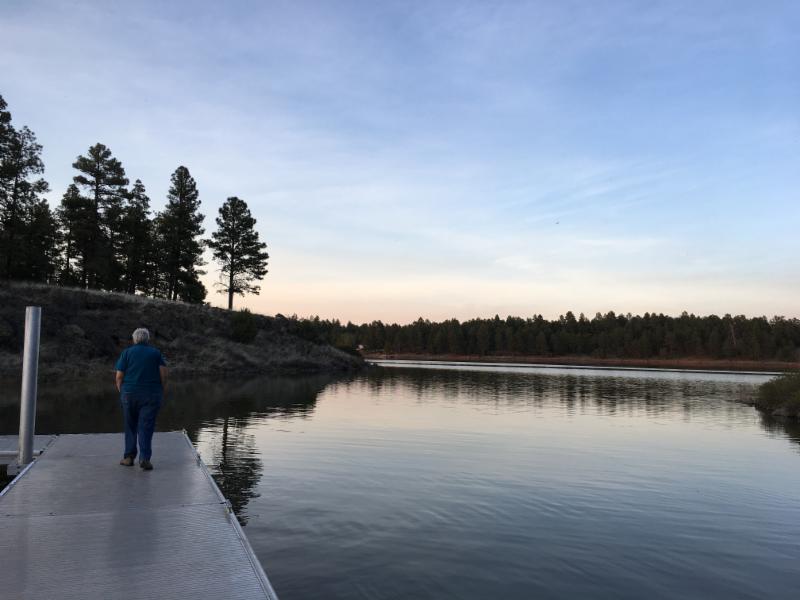
Especially now that I have finally embraced being here. For the first week, I was so aware of the dry air and the struggle to breathe, that I kept wishing we were at the ocean. But now that I’m breathing better, I’m happy to accept that, if I can’t be at the ocean, this is a pretty darn nice alternative.
Yes, the air is very dry, but it is clean, and clear, and cool. And there are so many trees, and a big blue sky, and there is almost always a breeze or big winds. And the lake is a beautiful body of water. There are all kinds of tree birds, and birds of prey, herons, cormorants, and waterfowl. And the hummingbirds have found Marika’s feeders.
So far, the highs have been in the 70’s, so I can sit outside in my chair with a book, or at the picnic table with my laptop, or inside, with the windows open, with good wifi reception and Apple TV. And at night the temperature dips into the 30’s and 40’s so I can sleep under a blanket with the windows open. And there so many places to walk.
When I walk with Mabel and Cody, we stop often, because Mabel has found something good to smell. Cody is more interested in tracking the squirrels and the rabbits that we call jackalopes because they are as big as dogs. For much of our walk I am standing midway between them with both arms and leashes extended in a tee, Mabel sniffing something good at one end and Cody waiting at the ready on the other.
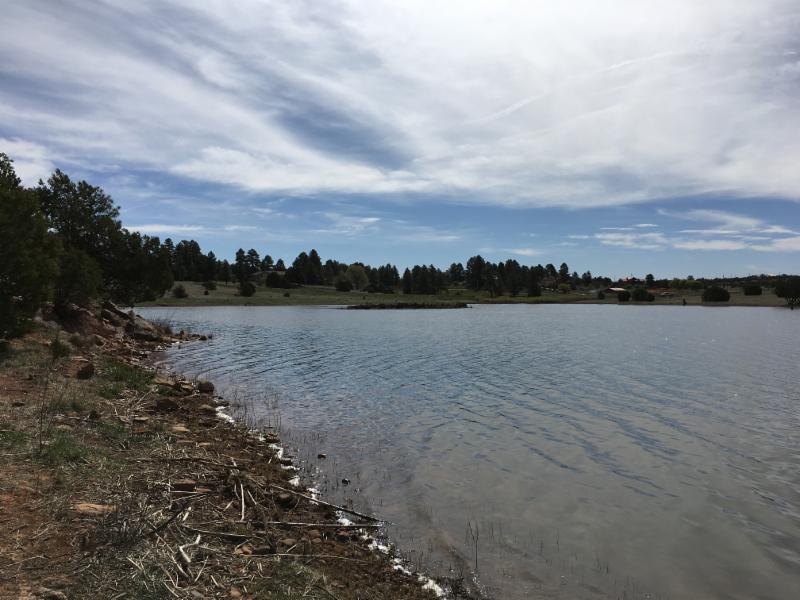
One afternoon last week I took Cody for a solo walk, so that we could walk longer and further. We started in our usual direction around the camp loop, then turned onto the dirt path that led to the next camp loop where I found a shortcut through a campsite over to the boat ramp and down to the lake trail. The trail was shaded by so many tall green pines, and the slight wind caused the lake water to lap on the shore like mini waves. It smelled sweet and piney, and we were the only ones on the trail. A pair of osprey circled over the water, looking for fish, and I could see the families of Canada Geese eating along the far shoreline. I sat on every bench we passed to take in the different views.
And again I embraced a little deeper, the gifts of being here. To be able to do good work, connect with people we might not otherwise meet, and share the beauty of this special place. And I realized that, after an intense month of working with clients and big city things, this is a time for me to focus on me, in my body, moving, and breathing, and building my strength and stamina. And reconnecting with what sparks my heart.
Yesterday I took myself over to the stairs that lead down to the lake so that I could get better cell reception to call a friend. It was breezy and late in the afternoon, so everything was in the shade, and cool. Even though I had a sweatshirt on, I chose to stay in the sun to make my phone call. So I sat on the stairs, remembering the Winnie the Pooh-ism: “Halfway down the stairs is a stair where I sit.” And the light on the trees and the water made every leaf and branch pop, and the blue in the sky matched the blue in the water, and I held my iPhone in landscape mode, snapping the shutter as I moved the trees and the water within the frame.
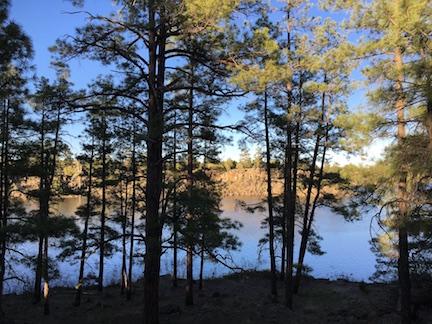
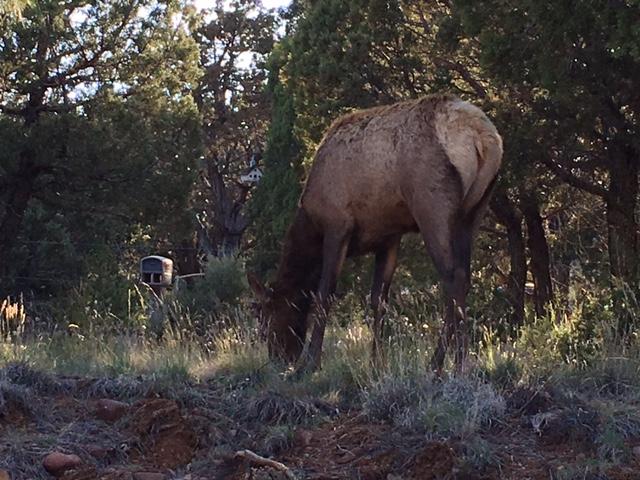
And then I called my friend, and shared how I was finally appreciating this new place, that we are so glad that we are here for two months, and not just one. That we saw a pair of female elk on our drive out of the campground the day before. And, that, for the first time, we’ve programmed the GPS Home button to take us back to camp.
When I got back to the RV it was close to dark, so we took the dogs for a quick walk around, then we all sat outside, the dogs cabled and lying down, Marika and I in our camp chairs, watching the sky fill with stars. The almost-half moon had a bright white rim around it, like the sugary rind on a piece of fruit slice candy. Marika pointed to the very top of a nearby pine tree where a Great Horned Owl stood, then flew off. Later, in bed, we opened the window to listen for his call.
[ssba]
An Update From Phoenix
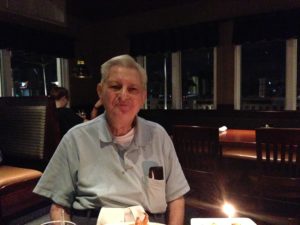
My dad on his 84th birthday, 2014. He still has no wrinkles!
A belated thank you for all of the support and compassion after my last letter about quitting smoking.
Many of you wrote and shared your own stories of quitting, offering compassion and tenderness. Some of you didn’t see what the big deal was about pot. A few have asked how it’s going.
The first three days were easy. I had full days of clients, get togethers with friends, and no cravings or urges. On the fourth day I was looking forward to returning to my beloved yoga studio, but I woke up with a twinge in my lower back. I freaked, remembering my 5 month bout with sciatica three years ago. My body was so tight that the only thing I knew to do was smoke to relax. I was able to breathe, and cry and notice what I was bracing against.
And instead of beating myself up for smoking, I was kind and compassionate, allowing myself to try a different way.
I have always been an all or nothing person. A few months ago I announced I was closing my Mac business after 30 years. No more weekly tips, no more working with clients, no more videos. Nothing. When I stepped back from the decision, I realized that there are some aspects of the work that I do still enjoy. That I can still do work that brings me and my clients joy, but I don’t have to do everything. And what I do still want to do, I can enjoy in moderation.
And so I gave myself permission to try this idea of moderation with smoking. And it’s working. I’m still smoking, but not all day every day. And again, I’ve been using the high time to go deep into all the emotions that are stirring, and realizing some new truths that I’d been too afraid to face before.
And then last week my dad ended up in the hospital, due to a very low heart rate. He’s 86 with stage 4 kidney disease. After not seeing him for 9 months, he seemed the same when I saw him at the beginning of the month. But last week he was short of breath, very tired, and wobbly when he walked.
Seeing him in that weakened state was very emotional, especially since I am not a very good caregiver. But Marika is. She has graciously taken over the role of talking with doctors, explaining things to my dad, and helping me cope with the changes. My dad finally agreed to get a pacemaker, and that has given him more energy and stability. Yes, he still has serious kidney issues, but for now, we are grateful that he has returned to his previous state of independence.
We were supposed to head north this past weekend, but we’ve postponed our departure, and will stay in Phoenix for a few days to settle him into life at home again, and make sure he’s able to take care of himself. If all goes well, we’ll drive him over to his lady friend’s house in Sun City West, where he plans to spend the next few weeks.
Meanwhile, we found someone to take over the yard irrigation, had a company smog a huge bee colony in the dead fig tree in the back yard, and a tree removal company will come next week to finish the job. And the gardener is back on a regular schedule.
There are a hundred other things we need to do, and start thinking about, and it can quickly feel overwhelming. But so far I’ve been able to reel us both back to right here, right now, and focus on the tasks that are right in front of us.
I continue to be so grateful for the ease and grace with which all of this is unfolding: My dad is being taken care of, Marika is leading the caretaking team, doing her best kind of work, and I am feeling grounded and comfortable in my role as scheduler, list-maker and project manager.
We can stay at this campground for however long we need, and there was no problem with delaying our camp hosting commitment. And the weather has cooled into the seventies and eighties, so I can be outside, walking and breathing my way through all of this.
If all goes well, we’ll head up to Northern Arizona for our two-month camp hosting gig at Fool Hollow Lake in Show Low on Friday. I am so ready to be in the trees, by the lake, with a simple working life, cool temperatures and lots of time to just breathe and be.
Thanks for being there, reading this. I feel the connection, and the support, and the love.
[ssba]
Confessions of a Pot Smoker on the Eve of Quitting
There comes a moment when you know that they way you’ve been doing something no longer works. Sometimes, you can change the behavior right then and there. Sometimes it takes a good long time from that moment of realization to actually taking action to do it differently. The biggest factor is, how do you treat yourself during the transition.
I don’t remember the first time I smoked pot, but it was some time during my sophomore year in college with friends. I liked the silliness, the laughing, and how ideas just exploded, especially when we were brainstorming together.
I started smoking regularly in the late 90’s, after many years of discovering and writing about my deepest secrets of loss and sexual abuse. I just needed a break from the trauma and depression. I remember going to an art store where I’d heard the owner sold marijuana, and asking, “So do you have anything to inspire my creativity?” He had no idea what I was talking about until I asked straight out, ” Can I get some pot?” He took me into the back room and sold me my first ounce.
Every time I went to pick up a two month supply, I’d tell Marika, “So if you get a call that I’ve been arrested, please come down and bail me out.”
The pot was cheap and harsh on my throat, so I put ice cubes in my plastic water bong to cool the smoke. I’d spend great hours in my studio in the garage writing fiction, and making art. And spending less and less quality time with Marika. I moved out in 2004, telling people that we still loved each other, but we were no longer bringing out the best in each other.
I moved into a friend’s guest house, with a living area and a huge room for my office and studio space. I was now lighting up as soon as I was done with my working day. I’d change into my comfort clothes – sweat pants and a t-shirt, and fill the bowl of the bong and take a few long hits. I’d turn on some music and dance barefoot on the Saltillo tile. Just one five-minute song to ground me and loosen me, and move everything out of my head and into my body. Then I’d dive into the art piece waiting on my work table.
Life was sweet and simple and enough.
And then in 2007, I had emergency open heart surgery to remove a benign tumor that was encapsulating my left atrium. Smoking had nothing to do with the tumor, so after the surgery, I continued to smoke regularly that first year of recovery.
A year later, I quit cold turkey. Because I wanted to connect with the bigger world, and smoking kept me isolated and insulated in my own little utopia.
Over the next four years, everything in my life ramped up to amazingness. I worked with a high level coach to grow my Mac training business, I became a life coach, I started writing the Heart Sparks blog, and in August, 2012, I realized my biggest dream of living at the beach. I sold most of my stuff, left the rest in storage at my dad’s, and, for the next 3 years, I lived in the 24-foot motorhome that Marika and I owned together, spending part of the year in Marika’s driveway and the rest in Central California in a sweet mobile home park across the street from the beach.
But it was so lonely. I had no community, no in-person clients, no dinners with friends. Just me and my dog Laddy. I checked out some local groups: Kirtan, yoga, 50+ meetups… but found no connections. I missed Marika and wished she would join me. But she still said no.
And then at the end of December in 2012 I went to dinner with a new artist friend and, being in her company reminded me how much I missed my creative self. She sent me back to the beach with a joint, and I smoked a little the next afternoon. I felt like I was saved. I had new creative ideas. I loved the ocean even more. Everything seemed enhanced. Even the sadness and missing Marika. But at least I could face it, work with it, not feel stuck in the grief. I hooked up with a friend from yoga who also smoked, and have been smoking ever since.
For a while it was just in the evenings. And then it was all the time, because pot made my dream life even happier. I was writing, creating prayer flags, making friends with my neighbors, feeling very happy in my little beach world.
I’d go back to Phoenix every few months and reconnect with friends there, but the gap was long enough to lose touch, but not so long that we really missed each other. And so every time I returned to the beach, I was even lonelier, and glad for my best friend, Mary Juana.
I have never denied that I am, again, smoking. But I also haven’t proclaimed it. Partly because, in many states that I’ve traveled, it is illegal. And partly, because of some shame.
For a long time I felt that, because I was smoking again, it meant that my book, Heart Sparks, was a lie. Because in the book I share that quitting smoking marijuana changed my life. But then I realized that it was true when I wrote it, and that smoking again is just another chapter of my continuing story.
In an interview last summer, a woman who wrote a book about her gambling addiction asked me to talk about how quitting smoking helped me feel my feelings more.
And I told her that, in fact, I was smoking again, and that I was also staying with all of the feelings as they arose, that pot actually helped me feel my real feelings. We discussed the differences between substance use and abuse. And we talked about the stigma of marijuana, how it was unregulated until the 1930’s, and then was hastily grouped with heroin and cocaine in the 70’s as a controlled substance.
New studies are coming out every day proving the medical benefits of marijuana. Even Dr. Sanjay Gupta, a practicing neurosurgeon and media reporter, publicly announced his support for the use of medical marijuana.
Some people take anti-depressants and tranquilizers for anxiety and depression. Others enjoy a daily glass or two of wine. Some people shop, or do yoga or hike their troubles away. I smoke marijuana.
And it has helped me in profound ways. Three years ago, I suffered a five-month bout of severe sciatica, followed by full-on menopause. The depression that came with it was paralyzing. Some days I felt weighted in my chair. My breath was short, stuck in my throat, my ribs felt like they were caving into my belly. I had no desire, no inspiration, no motivation. I wasn’t sad or angry. I was nothing. Even if I took a walk. Even if I laid down and practiced deep breathing. Even if I wrote and cried.
But with just a few puffs on my pipe, my mind loosened, my belly relaxed, and I could breathe. I felt hope, sometimes even excitement for the day. And if uncomfortable feelings arose, the marijuana helped me move into the emotions and work with them, without them paralyzing me.
I wasn’t smoking to escape my life. I was smoking so I could show up for my life. And with the variety of marijuana strains now legally available with my medical marijuana card, I was able to choose a blend that wasn’t about being high and wired, or so mellow that I just wanted to veg out in front of the TV or sleep.
But even though I knew it helped me, there were days when I chastised myself for smoking, because, in the future life that I see for myself, I am definitely not smoking. Because smoking makes me tired. And gives me the munchies. And sometimes, after the rush of getting stuff done, I am lazy to the point that it is easier to stay home, than to get out and explore my world.
And so I tell myself it’s time to quit.
When we were in Montana in August at the Merry Widow Mine, I stopped smoking for 7 days. I figured, we were already in a kind of rehab, breathing in small doses of radon gas to relieve inflammation 3 times a day for 11 days, and the rest of the time just watching Hulu, walking the dogs and laying low. It seemed like the perfect time to stop smoking too.
The radon treatments made me tired, and, without the pot to lift me, I let myself be very lazy. The first few days, when I felt the desire to smoke, I talked about it or read my book, or took a nap or watched TV. Over the next few days the cravings lessened, but I was irritable and cranky, and when I’d lie down, I couldn’t sleep.
Marika made me chicken soup, and we played dominoes, and watched a new detective series together. We even found a new trail that led to the reclamation ponds where the dogs played stick and Marika watched the ducks in the water.
But by the 8th day, I was so edgy I thought I was going to explode. My skin was tight. My breath felt like dragon fire. And I just wanted a break from myself.
I walked. I cried. I wrote about it. And then I asked Marika where she had stored my pipe. As soon as I took a puff, I felt a sweet and instant relief. I cried some more, wrote some more, shared some of the anxiety with Marika, and then she said, “OK, so quit bawling and at least enjoy it.” We took a walk with the dogs, and I could finally breathe.
And then I was smoking every day again. Just like that. Saying, I’d stop when I ran out. And then we were in Colorado, and Oregon, where it is legal and readily available, and I gave myself until Labor Day. Then to the end of the year. And then I finally realized that this was about more than just the role of pot in my life.
Smoking or not smoking was only one of many things that needed to shift between this life and my future visions of my life. So if I wasn’t willing to quit right then, fine. I needed to let it go and quit beating myself up about it. I needed to embrace my choice to smoke, give myself a tender hug and shift my attention to something that I WAS ready to change.
By letting go of the self-abuse, I could lean into what else is in my next dream, where else I wanted to focus my attention. And by shifting the energy, I knew the habit would change, the anxiety would dissipate, the need to smoke would lessen. And life would open up again, bigger and deeper and richer than I could imagine.
I knew. Because that is what happened the last time.
Back in 2008, when I started to think about quitting, I remember NOT trying a yoga class, NOT going to fun events because I wouldn’t give myself permission to go if I had smoked. And then I realized I was living an all or nothing existence, depriving myself of anything that might finally give me an alternative to smoking.
Once I gave myself permission to go out into the world even if I was slightly stoned, I began a weekly yoga practice, exhibited my art, and curated art shows. And eventually, all of those things and all that came from them, brought me to a place where I was ready to quit. Cold turkey.
And so, these past few months, as I have been wrestling with quitting again, I’ve been less hard on myself. I’ve been smoking without guilt, knowing that I have been shifting toward the Big Quit.
And now, finally, after being around good friends this past weekend, in person, feeling their life force, compared to my own, dulled, disconnected self, I’m ready to quit. Cold turkey, just like last time. Because I’m no longer depressed, and I’m not in pain. Because being stoned keeps me insulated, encapsulated, like the tumor in my heart ten years ago, and I just don’t want to keep doing it like this.
As I talked to myself about quitting, I heard myself say, “I’m quitting and I’m terrified.” And I thought, terrified of what? Or is that just a knee-jerk cliché response. AM I terrified? No, not really. More, I’m just not looking forward to being uncomfortable and not having a quick fix to feeling happy and energetic.
And my first response to that was, yes, but look at all of the support I have to provide other kinds of happy and energetic: good friends, in-person hugs, favorite restaurants, a yoga practice, and places in town that I’m looking forward to visiting.
So this past weekend I cancelled my next pot order, finished the stuff I had, and packed my smoking accoutrements in one of the RV storage cabinets.
I am looking forward to waking up clear headed, staying present for longer than two hours at a time, and not eating everything in sight. I am ready to move from the safety and security of my quiet inner world and reconnect again with life outside of myself.
Yes, it may be physically and emotionally uncomfortable for a while as my body deals with the cravings and the letting go of the habit, but I am focusing on all of the reasons that this is such a big YES for me now. And I cannot wait to see what unfolds.
Are you struggling with quitting a behavior that no longer serves you? Please share in the comments! We can all benefit from hearing each other’s stories!
[ssba]Greetings From the Salton Sea
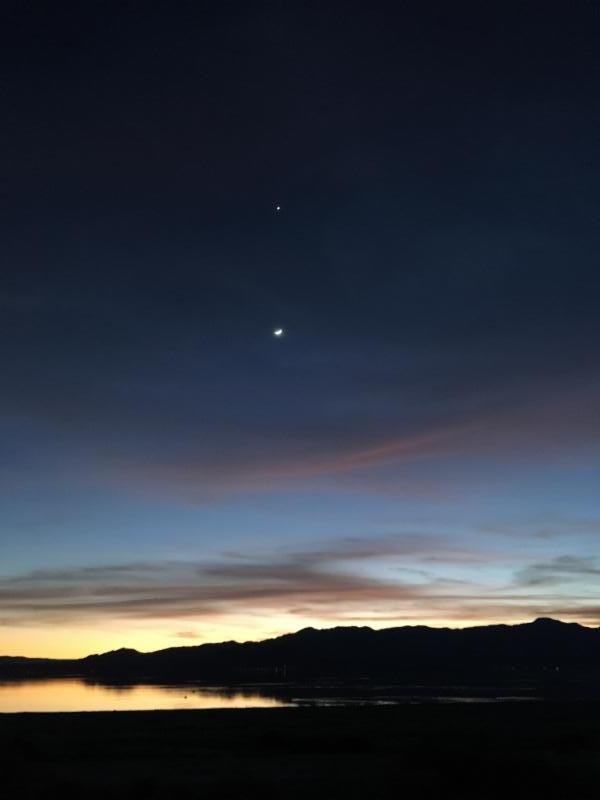
We left the rainy, cold Oregon coast at the beginning of January, expecting to do a quick, four day drive down to Morro Bay, enjoy a week of fresh fish, friends and birding, then head to the Salton Sea, south of Palm Springs for the month of February. But the west coast experienced some of the biggest wettest storms in history, which changed our travel plans.
Instead of staying one night at a casino at our first stop over the California border, we stayed for six, to avoid the icy roads, the big winds and all of the rain. We had no hookups, and there was no sun to charge our solar panels, so we ran the generator as needed and did fine. They had a dump station and fresh water, so we still had everything we needed.
After the first storm passed, we drove 100 miles to another small casino in the town of Laytonville. A new Mac client lives there so I asked her for dinner recommendations, and did she want to join us. Instead, she invited us over for farm fresh eggs the next morning.
And this is one of the things we love most about this life – meeting so many interesting and open-hearted people.
After a delicious visit with our new friend, we drove another 100 miles to the very small town of Williams, CA where we found a cute RV and trailer park. It was about twenty miles south of the Sacramento National Wildlife Refuse where Marika could finally go birding. On her first outing she saw 45 species.
Fog and rain and another wet storm was expected for the next few days, so we stayed in Williams and did laundry, ate very authentic Mexican food, took Mabel to the vet for her 4 days of diarrhea, and had dinner with a friend who lives in Sacramento. We cancelled our plans for Morro Bay, changed our route to avoid the Bay area bridges, and took Highway 99 south.
We marveled at how green the hills were as we made our way through the almond tree groves and the Tehachapi mountains. We spent a few nights at the fairgrounds in Antelope Valley, exploring the local museums and watching the snow levels get lower on the San Bernardino Mountains around us.
We dry camped for two nights at the Morongo Casino to avoid 45 mile an hour wind gusts and finally, on January 24, we arrived at our destination, the Salton Sea.
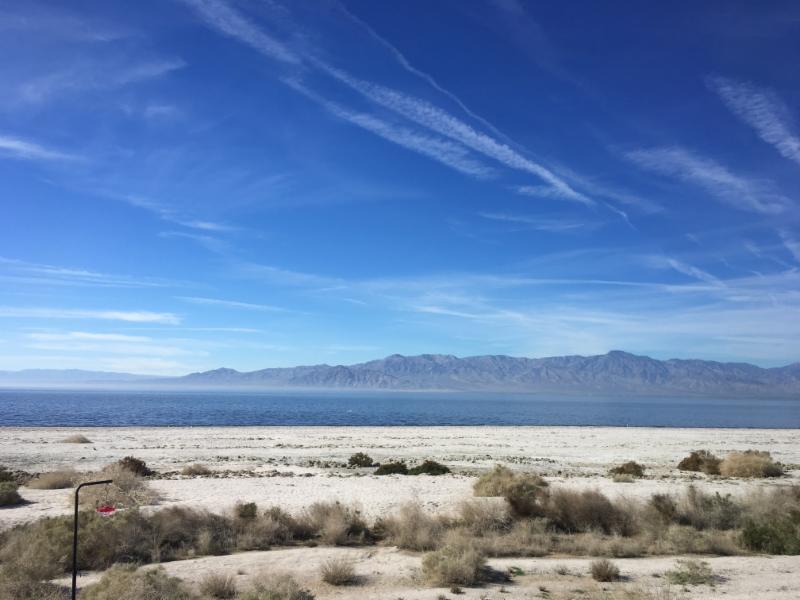
This strange place south of Palm Springs is a landlocked body of water with a higher salinity than the Pacific Ocean. The shoreline looks like pristine white sand, but when you get closer, you see that it is actually salt-crusted barnacles and bleached carcasses of dead tilapia from a die-out ten years ago.
Created hundreds of years ago by the flooded Colorado River, the Salton Sea is surrounded by miles of barren desert, the Coyote Mountains to the west and the Chocolate Mountains to the east. It is fed by the runoff from the surrounding geothermal plants and agricultural fields, but has no outflow to the ocean.
The Salton Sea is a major flyway for migrating birds, and that is why we’ve been coming here for the last 20 years. Marika can be out for hours, delighted to see her birds, and I’m happy to stay at home, writing, working, doing my thing.
We were both looking forward to our time here, to dry out and warm up after all of that cold winter rain. But after months of being in the moist, green climate of the Oregon Coast, neither one of us was prepared for the dryness and brightness of this place. And there were hardly any birds.
We both got hit with sinus infections the day after we got here. We neti pot-ted and drank lots of water. We found a Chinese restaurant 30 miles away and brought home hot and sour soup. And we rested as we tried to acclimate.
But I could only focus on all of the reasons why my body doesn’t like the desert. How my eyes burned in the blinding daylight, that I was suddenly coughing more, and the insides of my nostrils were on fire.
Without the daily distractions of working or travel planning, and no restaurants or grocery stores for miles, I was forced to really be here and sit with myself and my uncomfortableness.
I looked at pictures that I had taken at the beach and made a postcard of the Oregon coast. I imagined that cool, moist ocean air in my nose, drenching my itchy skin. And I wished that we were going back there, instead of heading to Phoenix, which is even more desert.
And then, after four days of complaining, my head cold lifted, and I was able to accept that, like every place we’ve been before, this is only temporary.
And that I had to shift my attention from how miserable I was, to what I could embrace about being here.
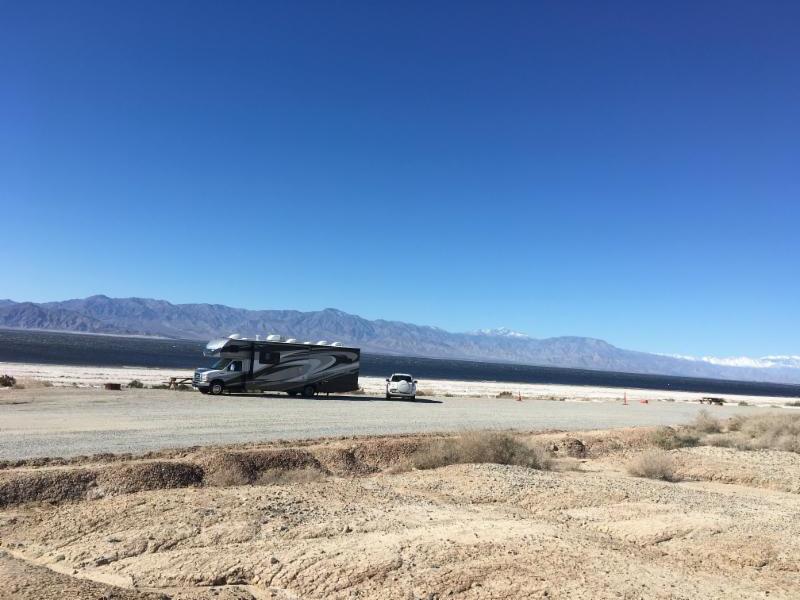
I love the barren landscape, the muted color palette of browns and grays and blues, and the miles of silence and space. As long as I can enjoy them from inside the RV, out of the sharp sun and the hazy air.
I love to sit at my desk, or on the sofa, or at the dinette, and watch the white pelicans float, like boats, on the water. I make up stories about the neighbors in the older RV behind us, and spy on the visitors who park near the entrance and walk down to the shoreline, and hear their surprise when they see their first dead fish.
And I love watching the trains go by. The Union-Pacific has a north and south bound line that runs parallel to Highway 111, about a football field away. A train passes at least thirty times during the day, and then through the night. With my earplugs, I sleep right through. And when I do hear it, it makes me smile.
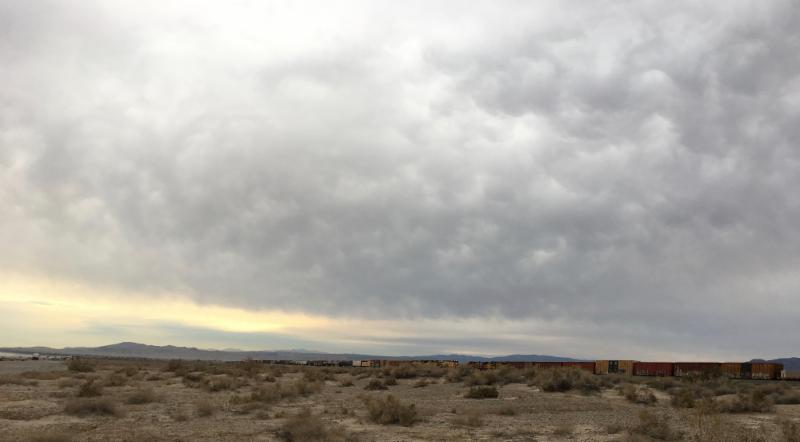
They are long trains, I guessed about 50 cars each. Yesterday I finally counted. There were 3 yellow engines pulling 102 flat cars, most of them stacked with blue, green and maroon shipping-containers with white lettering to identify the company. There was some faded graffiti on the cars, but not much. They go pretty fast, but it’s never really loud, as if the noise gets absorbed by all of the open space.
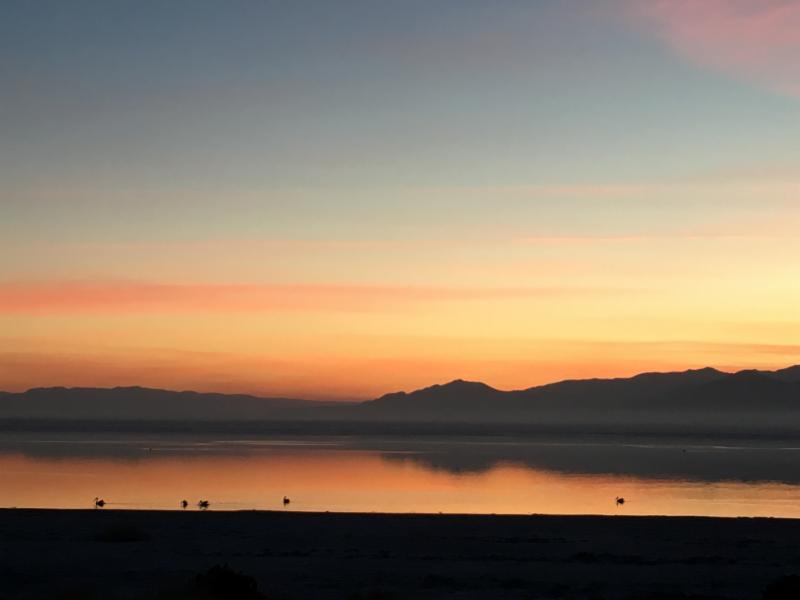
And the sunsets here are spectacular. Sometimes there are clouds to soak up the golds and pinks over the mountains. Sometimes the sky is so clear that hundreds of shades of blue and gray mirror themselves on the water. I love the silhouettes of the birds, floating solo near the shoreline, and flying south in pairs to roost for the night.
And I realized that the more I noticed about this place, the more grounded I felt, and the more willing I was to pack my waterproof winter hiking boots into storage and put on my mesh trail walkers to explore this strange landscape.
I took the dogs across the chunky graveled camp area into the dried mud and sand desert, in the opposite direction of the water. The ground was packed in most places, but sometimes my shoe pushed in far enough to leave an impression. There were deep, wide chasms in the ground from the recent rains. When Cody jumped across one, the edge crumbled, so I guided both dogs back to the firmer ground, closer to camp.
And I asked myself, “What’s the most important thing right now? What do I want more than anything? What might I regret if I don’t do it?”
The answer came fast: make this the best time of our lives. To really hone in on the parts that we enjoy so much. To explore how I want to engage and share, and how I want to support us financially. And to dream the next part of this journey together.
And so every day, I am finally able to say thank you for this time here with my beloveds. For the spaciousness of this eerie and magical place, where I can look out the windows at this landscape, with no hookups and so few people around, and know that we truly have everything we need.
We’ll be here on the shoreline for one more sunset, then we’re moving 40 miles south to a private RV park to be closer to the Sonny Bono National Wildlife Refuge, a prime birding area. We’ll be 15 minutes from Brawley, where there’s a real supermarket and an amazing wood-fired pizza place. We’ll have laundry, cable TV, free wifi and full hookups at our site. After 10 days of rationing water, I’m looking forward to a long, hot shower, and being able to run the air conditioner when the temperatures hit the 80’s later this week.
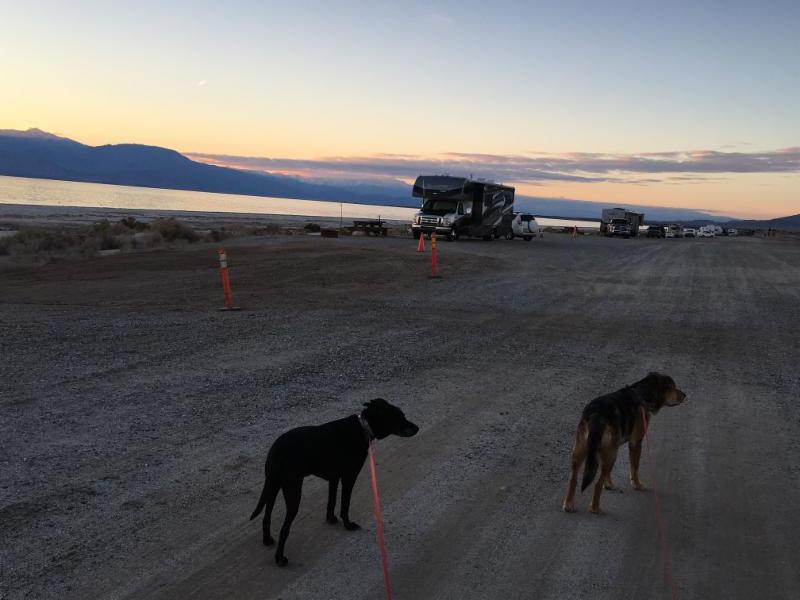
And, as always, I’m hoping there will some fun places where I can walk with the dogs, that will be soft on their pads and safe for some free-running. We’ll see. And if we don’t like it, it’s not forever. Nothing is.
Want to know more about this amazing journey, between these monthly updates? You can subscribe to the new HEART THE JOURNEY: love stories from the road.
Subscribers will receive one to three emails every week, February through March, with the latest news. I’ll also share stories about the people we meet, the places we discover and the daily joys and challenges of living on the road.
These are stories I won’t be sharing anywhere else.
You can join me on this unfolding adventure for $20.00 ($10/month for 2 months: February and March, 2017).
Sign up here!
[ssba]More. More of This!

We left our amazing campsite on the bluff of the Umpqua River Lighthouse last week and spent a day and a night in Coos Bay to take care of some things on the RV before heading south. While the RV was at the shop, Mabel got her toenails clipped, Marika and I got haircuts, we stocked up on groceries and dog food, and enjoyed the water views.
We spent New Year’s Eve at Harris Beach State Park where our Cape Blanco co-host friends Paul and Jayne are now working as yurt hosts. We had reservations for 2 nights, intending to begin our journey south on Monday morning. But as we were walking with the dogs around the campground on New Year’s Day, it was such a beautiful day, and the beach was right there, and Marika said, “I wonder what we would need to do to stay another night.”
Wow! It hadn’t occurred to me but, yes, I loved the idea. We didn’t have to be anywhere until Morro Bay on the 8th, and I had added extra days into the trip to get there. I immediately felt my shoulders drop, and my heart open up to feeling very happy. And so we picked up a registration envelope on our way home and agreed to leave on Tuesday instead.
On Monday it hailed, slushed, and there was rare snow on the 101! We were so glad we had already decided not to travel. Conditions were expected to be the same until Thursday, so we decided we would stay until it was better traveling weather.
And again, I was so grateful that we have the flexibility to stay longer for safety.
And then Jayne mentioned that the couple that was supposed to work at the day use area down the road had to go home for a funeral, and that the position might be open.
So we drove down to check it out. The host spots are situated behind a bluff, quiet and isolated, with a short easy path to the beach. There are trails along the nearby river, and also down to the visitor’s center. We talked to the other couple we’d be working with and asked about the job.
Our work would include opening and closing the gates at three locations, raising and lowering the flags, cleaning the hardly used bathrooms and my favorite, litter picking. And we’d have the use of a State Parks pickup truck during the working day. We’ll talk to the ranger tomorrow to get more information and make our decision. Right now we are playing the “what if we did it” game…..
And I see so clearly that this is exactly what I asked for when I stood on the bluff at our Umpqua River Lighthouse host campsite a few days ago. I was watching the waves crash over the jetties at the opening of the harbor, and counting the shades of blues and grays from the water out to the horizon, and I was thinking about the coming year and what I wanted. And I said, “More. More of this.”
And so, as you read this, we are deciding whether we’ll stick to the original plan of heading south to Morro Bay for a week, and then spending a month at the Salton Sea, or if we will stay on the Oregon Coast for another month, to do this new job.
If you’re as curious as I am to see how this unfolds, please subscribe to the new HEART THE JOURNEY: stories from the road.
Subscribers will receive one to three emails every week, January through March, with the latest news. I’ll also share stories about the people we meet, the places we discover and the daily joys and challenges of living on the road.
These are stories I won’t be sharing anywhere else.
You can join me on this unfolding adventure for $30.00 ($10/month for 3 months, January, February and March, 2017). The first 10 subscribers will also receive a handmade, one-of-a-kind art postcard from the road.
[ssba]
Endings and Beginnings: Be a Celebrating Fool!

I can’t believe it’s almost the end of 2023. It’s been quite a year for me! Really high highs and incredibly low lows. And everything in between. Like most of you.
So often, if we’ve had a loss in our life ( a loved one, a job, a relationship, etc) we say it’s been a bad year. Yes, definitely, it’s been hard, but every moment hasn’t been full of grief. We couldn’t survive if it were.
In the midst of all of the hard stuff there are always moments of hope, of joy, of gratitude.
These last few days of the year are an especially opportune time to reflect on ALL of the moments that have made up this year.
It’s easy to list all of the BIG stuff that has happened to us, for us.
But what else has happened? What else have you done?
Taking the time to honor and acknowledge our lives can be so empowering.
I invite you to find a quiet place and take out a piece of paper.
Ask yourself these questions:
What are you proud of?
What have you accomplished?
What has surprised you?
What new thing have you learned about how you show up in the world?
They can be big things, small things, challenges that you met head on.
They can be steps you’ve taken toward change in your life.
Then read your answers OUT LOUD to yourself, in a mirror.
Be proud. Be amazed. Be a celebrating fool!
Now take out a new piece of paper and write down a few things you’d like to see on this list at the end of next year. Again, big or small, it doesn’t matter. Maybe it’s something you do. Maybe it’s a change in how you feel.
Post this paper where you will see it everyday, where it will inspire you and remind you what you really want for yourself in this coming year.
If you’re really ready to commit and would like some support and accountability to actually make these dreams come true, consider the power and possibilities of some Heart Sparks coaching with me.
Email me if you might be interested and we’ll set up a time to chat to see if it’s a good fit for us.
[ssba]Sand and Trees and Sky
As you may know, I am in the process of closing my Mac training business after 30 years of helping people love their Macs. I’m doing it for all of the right reasons and it feels good. I’m excited about whatever is next, and I know this is what I really want for myself.
Yet, this in-between time niggles me.
I used to spend a lot of my working time gathering content and publishing the weekly Mac Tips and sharing the Mac love on Facebook. Now, without that busy work, I twiddle my thumbs and wonder what I’m supposed to be doing with this time.
One day last week I even considered continuing to send out the weekly tips, because folks really do enjoy them. I thought about charging for the yearly subscription to make it worth my time. And then I caught myself. This is not where I want to grow my energy. This is no longer the relationship that fulfills me and shines a radiant, glowing future. I need to stick to the plan of phasing things out, so that I am open and available for what is next.
It’s like when you leave any relationship. The habit to call or text or connect is still fresh. You start to rationalize why you may want to stay together. You think, well, maybe it wasn’t so bad. Because without it, there’s a lot of uncomfortable open, empty space.
But this is where the light shines in. This is where new sparks and old dreams raise their voices and call you forward.
And so, on that day that I started to fall backwards into what I know, what’s comfortable even though it’s not what I really want, I asked myself, what new thing I could do instead, that would take me away from the computer screen.
It was 45° outside, but not raining, and I knew the best thing would be to move in my body. I put on my winter layers and grabbed my litter-picker-upper stick and bucket and a pair of rubber gloves to go over my regular ones nd headed out. It felt so good to breathe in the crispy air. My shoes left imprints in the frosted grass as I walked up to Lighthouse Road and scanned for trash. There were no snack wrappers or beer cans, just cigarette butts in the parking area.
Two county workers were buzz-sawing the bushes behind the whale watching platform, creating a wider viewing area for tourists. I worried that they had removed the cross I had seen tucked back there the other day. But the area had actually been cleared, the vase of navy blue silk flowers was now standing next to the cross, and I could read the carved word, Dad.
I walked back toward the Meditation Triangle Park, intending to sit and enjoy the view. The water was so calm, the sky was the bluest blue, full of fat white clouds. I spotted a piece of trash a few feet down the trail to the dunes. I hadn’t walked that trail yet, deterred by its steepness, but today I said yes.
After I plucked the paper, I realized I didn’t want to have to climb back up the trail with a full bucket, so I left it at the trailhead. It was also there in case something happened and Marika needed to find me.
The trail started out as dirt but soon I was walking in sand, soft, like powder, but packed from all of the rain, so it was like walking down steps. Steep steps that cut a three foot wide path between tree roots and pine tree branches, wheat-colored grasses and blackberry bramble. After about three hundred yards of stair-stepping down, the trail opened up to the crest of the dunes and it looked like it ended with a hundred foot drop.
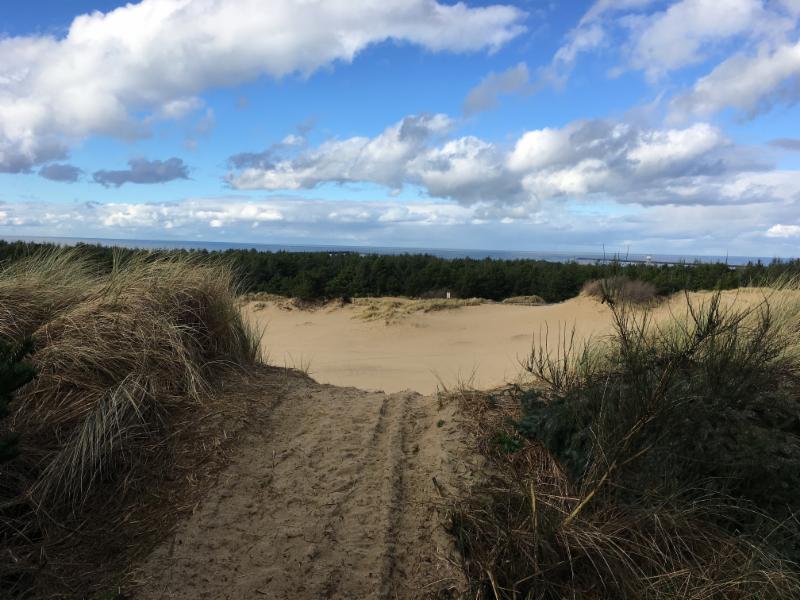
I took some pictures, then walked to the edge and looked down, and there were the dunes, stretching north and south as far as I could see, the pond-sized puddles in the valley of the sand, the ridge of trees, the ocean beyond that, and the wide-open sky.
I walked down the steep slope of the sand and, when I looked back, I spotted the motor home and the lighthouse, tucked behind the trees. I took pictures in every direction to capture the enormity of the sand and the sky.
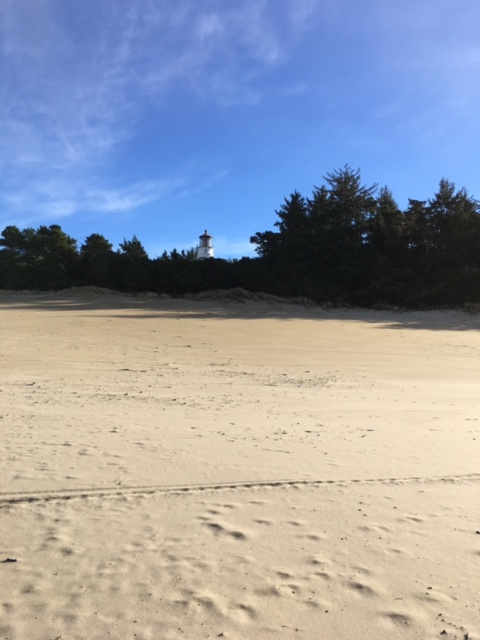
I walked across a flat section of sand, then down to the twenty-foot wide puddles. There were snack wrappers and plastic bottles, hair ties and broken glass, and I regretted not having my litter bucket with me. I heard the rumble of a faraway ATV, the steady moan of the foghorn and the rustle of my nylon coat sleeve as I walked. Birds chitted in the trees and the Coast Guard helicopter flew overhead. I couldn’t see the ocean, only sky and trees and sand, rising and sloping in all directions.
I turned toward the sun and planted me feet in the sand, finding my alignment, dropping my weight and my breath into the sand. I did some modified sun salutations, then folding down into a good, long, down dog. It took a few minutes to find a position where my hands didn’t shift in the sand. And I breathed into my body, my bones, my heart.
The climb back up the dunes was hard work. I felt the muscles in the tops of my thighs and my buttocks. I stopped several times to feel my pulse, catch my breath, and take in the view. And I was so aware that, with each step, I was saying yes to this next wave of goodness, of me bringing more of myself and my gifts to the world. I may not yet know what that looks like, but standing there, my heart pounding and the horizon oh, so wide, I knew that I was ready.
[ssba]